
Certified Arborists
Trusted Indianapolis Tree Service for 40 Years
Cabling &
Bracing
Tree Risk Assessment
Disease & Diagnosis
Spider Lift Tree services
Experienced. Professional. Local.
Trust us with your trees
Menchhofer Tree Care specializes in tree service and tree removal for residential and commercial customers in Indianapolis and surrounding areas. Whether you need to remove a tree for practical or aesthetic reasons, we’re here to help. We also trim trees to remove unwanted limbs, prune trees to encourage growth, remove stumps with a stump grinder, and install landscaping, remove snow in the winter, and much more.
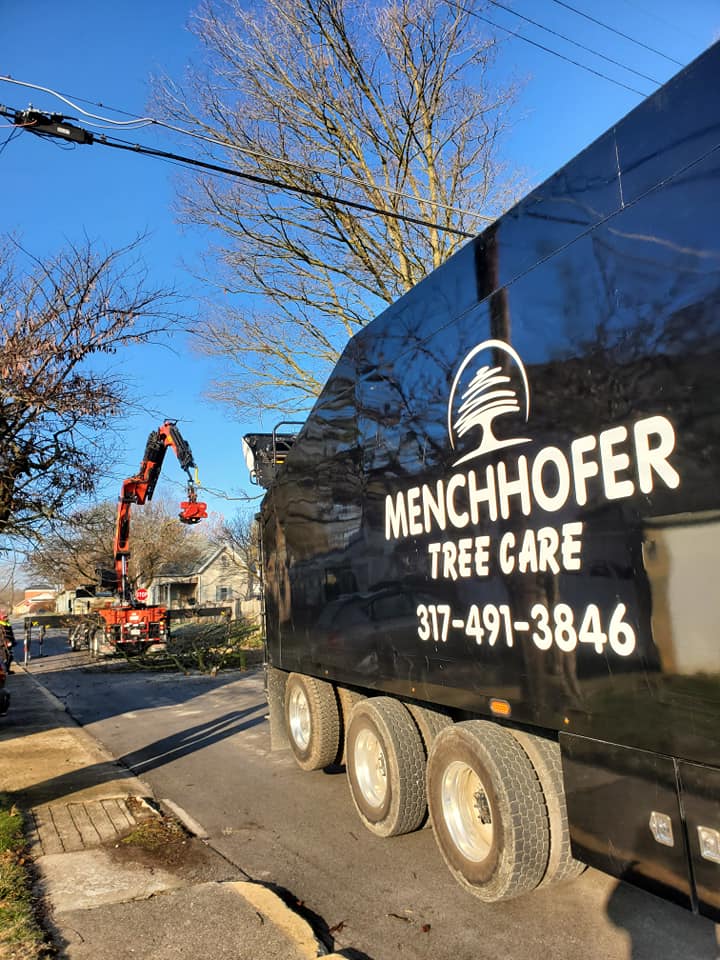
We pride ourselves on keeping up with the latest in tree service technology, including Spider Lifts to access hard to reach areas. This relatively light-weight machine is easily maneuverable, and doesn’t tear up your yard the way other Indy tree care companies’ heavy equipment may. Our Spider Lift eliminates the need to climb most trees, making tree care, removal, pruning, and trimming safer and faster.
Our certified arborists ensure your trees receive the best care possible from pruning to total removals. We offer plant health care services including insect and disease control and risk assessments using the latest scientific research and application techniques.

Certified Arborist or a Simple Tree Service?
What's the difference? Education. Experienced. Professional. Expertise.
What is a certified arborist? They are educated and practice approved pruning techniques, tree biology, as well as all aspects of proper tree care backed by science. Certified arborists are ISA certified which demonstrate their education, dedication, and training in the tree industry. Their training and education continues every year, as they must acquire continuing education to maintain certification.
Homeowners often see “tree expert”, “tree surgeon,” and others, but these are self-appointed titles to themselves. They do not receive any education. The only thing they know about tree care comes from their anecdotal experiences. These service providers may work hard and possess some skill, but they do not have advanced training or education. When you hire such a professional tree service, the consumer really has no way of knowing what they are getting with regards to the actual expertise of the company. Additionally many companies advertise their experts as arborists but again they are not certified.
Untrained tree service companies lacking education may recommend services that may harm or damage your trees beyond repair. For example: they may want to top your trees, which is very harmful. These providers may also suggest tree removals as they do not understand tree biology and what exactly the issue may be.
Menchhofer Tree Care certified arborists earn the ISA certification after studying rigorous programs and passing final exams. Only when requirements are met do they achieve the accreditation. This enables the certified professional to offer tree services and tree health treatment that maximize the lifespan of our precious trees. Our 40 plus years of experience also helps.
Our certified arborists at Menchhofer Tree Care are your trusted source for all tree care services from tree removals to disease and diagnostic consultations in west central Indiana. To start on your next project, contact us today!
Experienced
Professional
Local
We specialize in creating Happy Clients
Leave us a review!
Video Coming Soon!
Stay Up To Date
Connect With Us
If you would like to be the first to know about any news or updates on Menchhofer Tree Care, be sure to give us a follow on social media. From there, you can watch videos, learn more about our services, and get closer looks at our projects. Click the buttons to visit our social media pages. We appreciate your interest in our company!